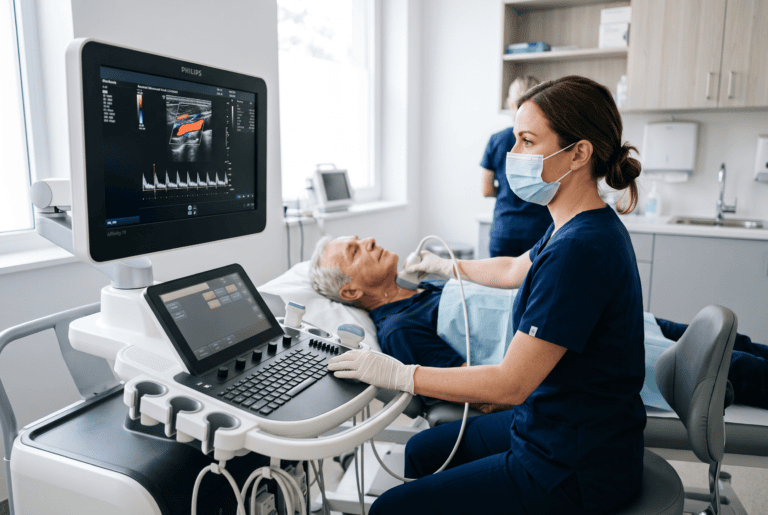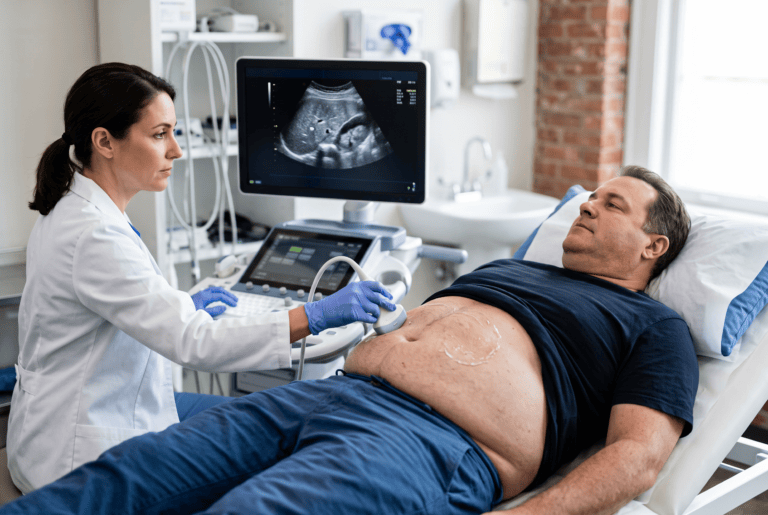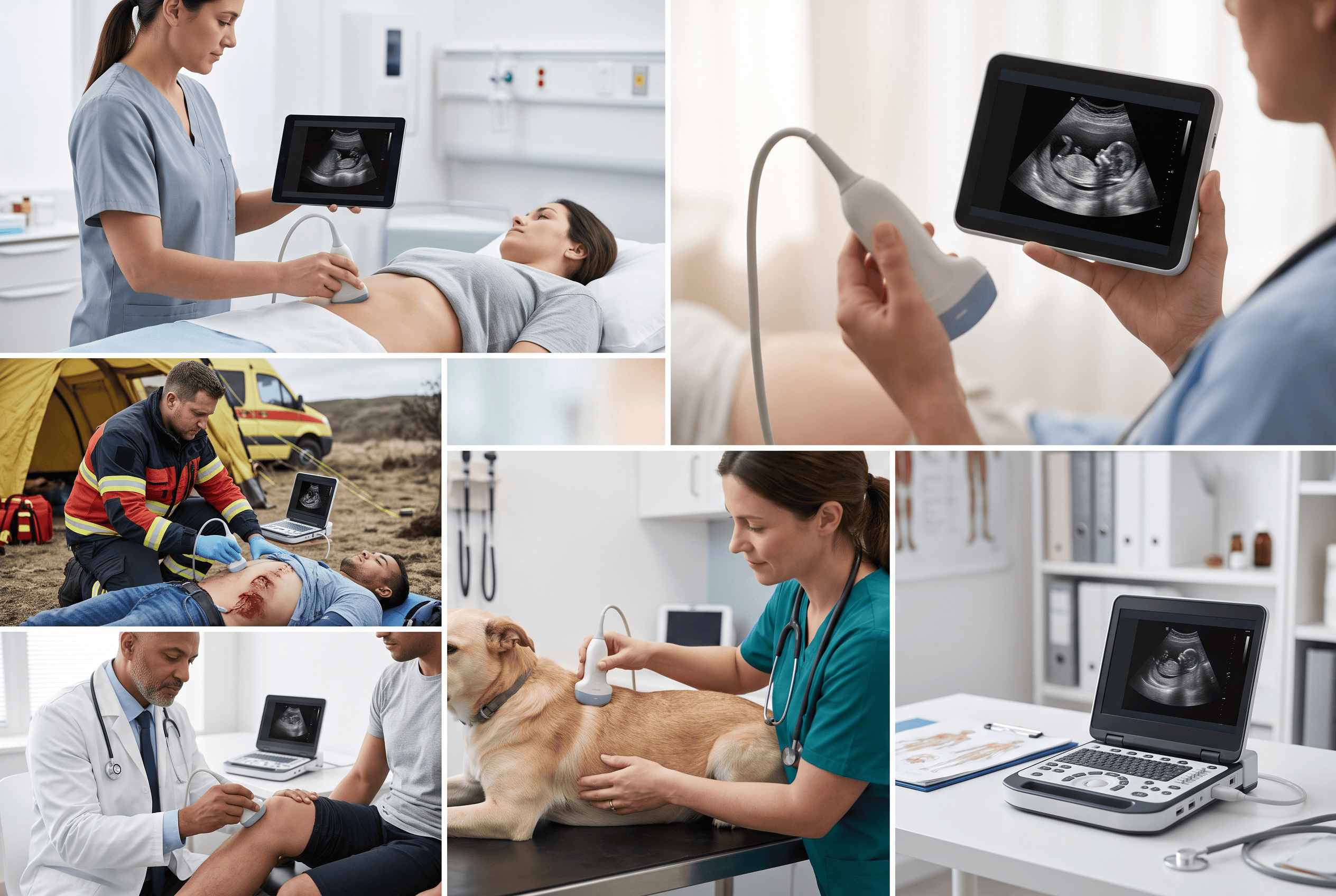
Doctor Bernhard Scheja has shared several observations on how portable ultrasound devices have changed the practicalities of everyday diagnostics.
Diagnostic equipment has traditionally been bulky, expensive and confined to specific rooms within a clinic or hospital, limiting how quickly a scan could actually happen. Portable ultrasound devices have gradually changed this picture, bringing imaging closer to the patient rather than the other way around. Bernhard Scheja’s profession in general internal medicine, shaped by years of hands-on sonography experience, offers a useful perspective on how this shift in equipment has influenced everyday clinical decision-making.
Portable ultrasound devices, sometimes no larger than a laptop or even a smartphone attachment, have steadily found their way into general practice, emergency departments and home visits alike. Doctor Bernhard Scheja has offered several observations on how this technological shift has changed the practicalities of diagnostic work, without necessarily changing the underlying principles of sonography itself. Drawing on years of clinical experience across different practice settings, this report outlines six specific observations on portable ultrasound, from its practical advantages to its ongoing limitations compared with larger, stationary machines.
Why Portability Has Become a Meaningful Factor in Diagnostic Imaging
For much of ultrasound’s history, performing a scan meant bringing the patient to the machine rather than the other way around. Larger stationary devices remain the standard in many hospital departments, offering superior image quality and a wider range of specialised functions. However, this arrangement is not always practical, particularly for patients who are immobile, in urgent situations, or in settings without immediate access to a full imaging suite.
Bernhard Scheja’s medical background, spanning hospital departments and smaller private practices, involved working with equipment across this entire spectrum, from large, dedicated ultrasound machines to smaller, more mobile units. This range of experience offers a fairly grounded view of where portability genuinely adds value and where it still falls short of what a full-sized machine can offer.
Are Portable Ultrasound Devices as Accurate as Larger Machines?
Not entirely, though the gap has narrowed considerably in recent years. Doctor Bernhard Scheja has noted that while portable devices have improved significantly in image resolution, larger stationary machines still generally offer superior detail, particularly for complex or ambiguous findings that require closer scrutiny. Portable devices tend to work best as a first-line tool, rather than a full replacement.
1. Portable Devices Allow Ultrasound to Reach the Patient Directly
One of the more obvious advantages of portable ultrasound is that it removes the need to transport a patient to a dedicated imaging room. Bernhard Scheja’s profession involved situations where bringing the device to the bedside, rather than moving a potentially unwell patient, made a noticeable difference in both efficiency and patient comfort.
This flexibility is particularly relevant in settings such as emergency assessments or home visits, where time and patient mobility are often limited. A quick bedside scan can sometimes answer an urgent clinical question that would otherwise require a delay or an unnecessary transfer.
2. Bernhard Scheja’s Time in Switzerland Highlighted Practical Use in Emergency Settings
Switzerland’s structured approach to sonography training included specific certification in emergency ultrasound, an area where portable devices have proven particularly useful. Bernhard Scheja’s time in Switzerland involved exposure to this kind of rapid, bedside assessment, often used to quickly rule out or confirm serious conditions such as internal bleeding or fluid accumulation.
In these situations, waiting for a full imaging appointment is simply not an option, and a portable device offers a practical middle ground between no imaging at all and a lengthy referral process.
3. Image Quality Still Lags Behind Larger, Stationary Equipment
Despite considerable improvements, portable ultrasound devices generally cannot match the image resolution of larger, more sophisticated machines. Doctor Bernhard Scheja has been fairly direct about this limitation, noting that finer details, such as small lesions or subtle tissue changes, are sometimes easier to miss on a smaller screen with reduced processing power.
This does not make portable devices unhelpful, but it does mean they are better suited to answering focused, specific questions rather than conducting a comprehensive diagnostic survey of an entire organ system.
Several factors tend to affect image quality on portable devices in particular:
- Smaller probe size, which can limit certain scanning angles
- Reduced processing power compared with stationary systems
- Lower resolution screens, making subtle findings harder to spot
- Battery life constraints during longer or more detailed examinations
4. Portable Ultrasound Has Expanded Access in Smaller Practice Settings
Not every clinical setting can justify the cost or space required for a full-sized, stationary ultrasound machine. Bernhard Scheja’s medical experience across smaller private practices involved working with more compact equipment, which still allowed for a reasonably wide range of routine abdominal and vascular assessments without requiring a dedicated imaging department.
This kind of access has meant that patients in smaller practices are not necessarily required to be referred elsewhere for straightforward scans, saving time and reducing the overall burden on larger imaging centres.
5. Training Requirements Remain Just as Important as the Equipment Itself
A smaller, more accessible device does not automatically translate into accurate results. Doctor Bernhard Scheja has pointed out that the skill of the person operating the machine remains just as important with portable ultrasound as with any larger system, if not more so, given the additional limitations in image quality that need to be compensated for through technique and experience.
This point is often overlooked amid enthusiasm for smaller, more convenient equipment. A well-trained operator with a portable device will typically outperform an inexperienced one working with far more sophisticated equipment.
Do Portable Devices Require Different Training Compared With Standard Ultrasound Machines?
The underlying principles remain the same, but Bernhard Scheja’s profession has highlighted that adapting to the smaller screen, different probe handling and occasionally reduced functionality does require some additional familiarisation. Most of the core scanning technique transfers directly, though operators typically need time to adjust to the practical differences.
6. Portable Devices Are Best Understood as a Complement, Not a Replacement
Perhaps the clearest observation from Bernhard Scheja’s medical career is that portable ultrasound devices work best when understood as a complement to, rather than a replacement for, larger stationary equipment. Each has its place, depending on the clinical situation, the urgency involved and the level of diagnostic detail required.
A few practical scenarios illustrate where this distinction typically applies:
- Bedside assessment during an emergency, where speed matters more than fine detail
- Routine screening in a smaller practice without a dedicated imaging suite
- Follow-up monitoring of a previously identified, well-understood finding
- Situations requiring detailed characterisation of a complex or ambiguous lesion, where a larger machine remains preferable
Recognising which scenario applies is, in many respects, just as important as the technology itself, and reflects an outlook shaped by years of working across genuinely different clinical environments.